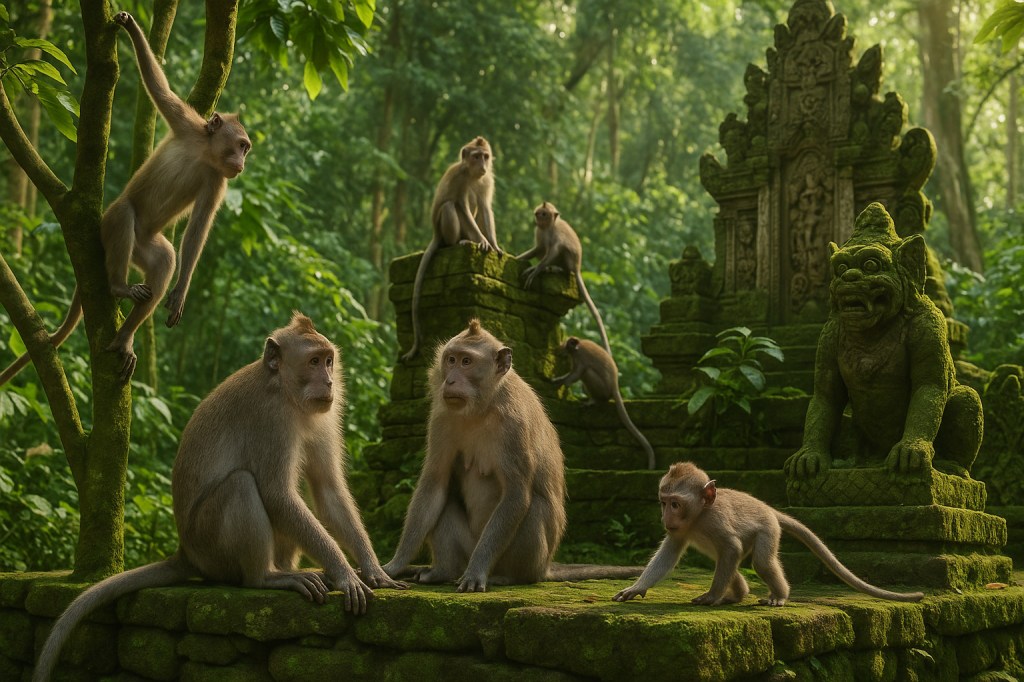
Alright, let’s talk about Bali monkeys. Yep, those cheeky little creatures you see all over Instagram—hanging out on temples, climbing on tourists, and straight-up robbing people like it’s their full-time gig. If you’re planning a trip to Bali, especially places like Ubud or Uluwatu, chances are real high you’re gonna run into them. And listen, they’re not just cute for the ‘Gram—they’re smart, fast, and they know exactly what they’re doing. I’ve been guiding folks around Bali for years, and lemme tell you, the monkeys? They run the show.
Now before you go thinking, “Oh, how adorable!”—hold up. There’s a lot to know about these critters, and I’ve seen enough sunglasses swiped and water bottles hijacked to fill a novel. So let’s get into the nitty-gritty, all the real stuff that blogs and guidebooks tend to leave out.
Where You’ll Meet the Monkeys in Bali
If you’ve Googled anything about monkeys in Bali, the first name that pops up is probably the Sacred Monkey Forest Sanctuary in Ubud. Yeah, that’s the big one. You’ve also got Pura Luhur Uluwatu (up on the cliffs), Sangeh Monkey Forest, and even random roadside temples with wild troops just chillin’.
But here’s the thing. These monkeys? They ain’t just hanging out waiting for you to say hi—they’re watching. Every. Move. You. Make.
- You walk in with a plastic bag? Boom. Gone.
- Holding a banana? You’re basically a walking buffet.
- Wearing sunglasses on your head? Say goodbye, bro.
They’ve learned that tourists = food and cool stuff. It’s like they got a sixth sense for spotting weakness. I once had a guy on a tour literally lose his vape pen out of his pocket, and a monkey ran off with it like it just won the lottery.
Read also: Bali Weather in August
So yeah, you’ll find monkeys at:
- Ubud Monkey Forest – touristy, but the monkeys are pretty chill unless you’ve got food or shiny stuff.
- Uluwatu Temple – views are stunning, but the monkeys here? Straight up gangsters.
- Sangeh Monkey Forest – quieter, fewer people, and the monkeys here are a little less aggressive. Still, don’t let your guard down.
- Alas Kedaton – small temple area with lots of monkeys, more relaxed than the big-name spots.
What to Know Before You Visit a Monkey Forest
So here’s a real talk moment. You don’t just walk into a monkey forest and expect to have a chill time. Nah, this ain’t a petting zoo. These are wild macaques, and they’ve got attitude. They’re not being aggressive for fun—it’s survival and food for them. But tourists? We kinda feed into their bad behavior. Literally.
Don’t Bring Food. Like, Seriously.
Yeah, yeah, everyone wants that cool selfie with a monkey on their shoulder. But bringing snacks? That’s how you start a full-blown turf war. I’ve seen a girl get surrounded by five monkeys because she had a granola bar in her backpack. They can smell that stuff through zippers. Leave the snacks in your hotel, or you’ll be the entertainment for the day.
Also—don’t hide fruit in your bag thinking they won’t notice. They will. They’ll open bags, dig through purses, unzip backpacks. I watched one open a diaper bag once. Don’t ask.
Hold Onto Your Stuff Like It’s Gold
Sunglasses, phones, hats, flip-flops, even earrings—if it’s loose, it’s gone. Monkeys love shiny things and anything they can play with. And no, you probably won’t get it back.
I had a buddy try to negotiate with a monkey once. It had his car keys. He offered it a banana, the monkey took the banana and the keys, and climbed a frangipani tree. We spent 45 minutes trying to bribe it back down with papayas. That was a Tuesday.
Don’t Make Eye Contact
I know it feels weird, but eye contact can come off as a challenge or threat. Especially if you’re in Uluwatu. Stare too long and that little guy might bare his teeth or jump at you. Just keep calm, be cool, and don’t try to be alpha with a monkey. You will lose.
Monkey Behavior 101 (aka Why They’re So Dang Smart)
These aren’t your average forest monkeys. The long-tailed macaques in Bali have learned how to interact with humans on a whole other level. In places like Uluwatu, they’ve been known to trade stolen items for food. Like, they actually hold stuff hostage until you offer something better. That’s next-level thievery, man.
There’s a study from Udayana University that found some of these monkeys intentionally steal more valuable items, like prescription glasses or wallets, ’cause they know they’ll get a better trade. That’s wild. Literal blackmail in the jungle.
Oh, and did I mention they teach each other? The baby monkeys watch how the older ones pull off a good heist, then start doing it themselves. It’s like a monkey crime family. Cute, but terrifying.
Personal Stories (Because You Can’t Make This Stuff Up)
I’ve been guiding tours around Bali for over 10 years. I’ve seen couples argue because a monkey ran off with their GoPro, kids crying ’cause their ice cream got jacked, and even one guy who tried to “shoo” a monkey and got chased halfway through the forest. True story.
There was this one lady, American I think, she had this big floppy hat and aviators. One monkey jumped on her shoulder, she froze (which is good), but her husband panicked and tried to pull the monkey off her. Big mistake. Monkey bared its teeth, screamed (loud too), and more came running. Whole troop showed up like it was go-time. They didn’t attack, but the lady dropped her hat and sunglasses in the scuffle, and the monkeys were gone with the loot.
Point is: if you stay calm and respect their space, you’re usually fine. Panic, and things can spiral quick.
How to Actually Enjoy a Visit Without Losing Your Sanity
Okay, so you’re still thinking of visiting a monkey forest, yeah? Good. Honestly, it’s still one of the most unique experiences you’ll have in Bali. Just gotta go in prepared. Here’s how to enjoy it without becoming a walking buffet or a victim of monkey theft.
Go Early in the Morning
Less crowds = calmer monkeys. By midday, they’re more active, hungry, and a bit more… let’s say, “mischievous.” Early hours are better for photos too.
Hire a Local Guide
Seriously, this one’s underrated. Guides know the monkey’s habits. They’ll tell you where to walk, how to behave, and what to avoid. Plus, if things go south, they know how to de-escalate. I’ve talked down more monkey situations than I can count.
Don’t Bring Anything You Can’t Afford to Lose
Like, for real. Leave your AirPods, pricey sunglasses, and Gucci bags at home. If you can’t afford to see it in a monkey’s paws—or dangling from a tree branch—don’t bring it in.
Monkeys and Balinese Culture – It’s Deeper Than You Think
Monkeys aren’t just cute attractions in Bali. They’ve got spiritual significance. In Hindu belief, Hanuman—the monkey god—is a symbol of strength, loyalty, and intelligence. That’s why so many temples have monkey residents. They’re seen as sacred and protected, not pests.
That’s why you’ll notice Balinese people don’t usually interfere with them. Even when monkeys are causing chaos, locals are more likely to laugh or gently redirect them. It’s all about balance and respect. Tourists sometimes forget that, and that’s when stuff goes wrong.
There’s also a traditional belief that if a monkey chooses you—like sits on you or follows you—it’s good luck. Just, y’know, make sure it’s not trying to jack your wallet too.
What To Do If You’re Bitten or Scratched
Let’s keep it real—bites can happen, especially if you try to feed them or touch the babies. And yeah, you should take it seriously.
If you do get bit:
- Wash the area thoroughly with soap and water.
- Go to a nearby clinic immediately—Bali has several that deal with this stuff.
- You might need a rabies shot, especially if your vaccination status ain’t up-to-date.
Don’t wait. Don’t “see how it looks tomorrow.” Go. Even a small bite can be risky.
So, Should You Skip the Monkeys Altogether?
Nope. They’re wild, unpredictable, a little rude—but visiting Bali without seeing the monkeys is like skipping rice fields or satay. It’s part of the island’s whole vibe. Just treat it like you would any other wildlife experience. Respect it. Prepare for it. And for the love of sandals, don’t wear anything you wouldn’t want stolen by a furry little kleptomaniac.
And hey, if you do get robbed by one? You’ll have a killer story to tell. Just maybe keep that wallet zipped, yeah?
Monkey Forest with Kids? Here’s What You Need to Know
Bringing your kids to see the monkeys sounds fun on paper. I get it. They’re adorable, and watching a toddler laugh at a monkey scratching its butt is peak parenting joy. But—and this is a big but—you really gotta prep the little ones beforehand.
First off, monkeys don’t understand the concept of “it’s just a kid.” If your child’s holding food, or even a toy that looks edible (think plastic bananas or anything colorful), a monkey might go for it. And they’re not shy. I’ve seen a monkey grab a juice box right out of a toddler’s hand, pop the straw in, and sip like it owned the place.
So here’s how to avoid a total meltdown:
- Talk to your kids before you go. Make it a little game—“Monkey manners!”—where they learn not to scream, run, or wave things around.
- Keep your kids close. Like, hand-holding close. The last thing you want is a toddler chasing after a monkey who just took their toy.
- Bring distractions. Not snacks (don’t be that person), but maybe a small camera or binoculars. Something to focus on besides feeding the animals.
Some parents bring strollers, but honestly, not all monkey forests are stroller-friendly. Ubud’s has lots of stairs and uneven paths. Baby carriers are a better bet.
Monkey Forest Do’s and Definitely-Don’ts
Alright, let’s break down some common behavior I’ve seen that either works like a charm—or ends with tourists surrounded by angry macaques. Just between us, there’s a right way and a very wrong way to act around Bali monkeys.
The Do’s
- Walk calmly. Monkeys pick up on nervous energy.
- Keep your voice low and movements slow.
- Let them approach you—don’t chase them for selfies.
- If one climbs on you, stay still and relaxed. They’ll usually hop off quick.
- Respect the forest as a temple area—it’s not just a tourist spot.
The Don’ts
- Don’t stare them down. It’s not a staring contest, and you will lose.
- Don’t bring plastic bags. They know the sound and will come running.
- Don’t try to touch the babies. Mama monkey will not be chill about that.
- Don’t scream or run. That kicks their predator response into high gear.
- Don’t assume your travel insurance covers “monkey-related incidents.” Check that.
One time I had a girl try to take a selfie with a baby monkey. She crouched down, smiled, clicked—and next thing she knew, she was being swarmed by three adult monkeys. All because she got too close to the baby. She was fine, but shook up, and learned quick: cute doesn’t mean cuddly.
What Locals Think About Tourists and Monkeys
Okay, I gotta share this because it’s honestly hilarious (and kinda sad). I was chatting with a local guide in Sangeh, and he straight-up told me, “Foreigners think monkeys are cartoon characters. But they’re little hustlers.”
And he’s right. Locals grow up around these animals. They know how to act. They give them space, don’t show food, and never try to touch them. They treat the monkeys with a sort of mix of reverence and healthy caution. Tourists, on the other hand? Not always.
There’s this idea that because monkeys are in a tourist spot, they’re tame. Nope. They’re just used to humans. Doesn’t mean they’re friendly.
And honestly? The monkeys have adapted to tourists more than the other way around. Some even wait by the entrances now because they know that’s where people fumble their stuff—dropping phones, bags, snacks. Smart little guys.
Other Places to See Monkeys Without the Chaos
So maybe the thought of aggressive monkeys stresses you out. Fair. Let me throw out a few quieter alternatives that still give you that wild monkey experience—without the drama.
Sangeh Monkey Forest (North of Ubud)
It’s smaller, surrounded by massive nutmeg trees, and way more peaceful. The monkeys here are less aggressive because the crowds are thinner, and they’re not constantly fed by tourists. It’s more chill and honestly kinda magical early in the morning. I’ve brought plenty of families here, and we rarely have any “monkey incidents.”
Alas Kedaton (Near Tabanan)
This one’s kind of off the radar for most tourists. The monkeys here are well-fed and relaxed, and the temple has a very old, mossy vibe that makes you feel like you’re in an Indiana Jones movie. The guides there are super helpful too, and they usually carry fruit to help distract the monkeys if things get tense.
Mount Batukaru Region
Sometimes, on hikes or during nature walks near this area, you might spot wild macaques in the trees. They’re not “trained” to deal with humans, so they usually keep their distance. This is more of a “watch from afar” monkey experience, and it’s kinda beautiful that way. No sunglasses getting stolen here.
Quick Monkey Q&A (The Stuff Everyone Asks Me)
Alright, here’s a quick-fire set of questions I’ve gotten over the years:
Q: Can I feed them?
A: Please don’t. Even if locals sell fruit at the entrance, the official advice is no feeding. It creates dependency and aggression.
Q: Do they bite often?
A: Not often, but it happens. Usually when someone tries to grab something back or gets too close to a baby.
Q: What do I do if one climbs on me?
A: Stay still. Don’t swat at it. Let it sniff around and hop off. If you panic, they’ll panic.
Q: Can I bring my drone?
A: Nah, don’t. The noise stresses them out, and some forests ban drones completely. You don’t wanna be that guy.
Q: Are they dangerous?
A: They can be. They’re wild animals. If you respect them and their space, you’re probably fine. But yeah, don’t mess around.
 Braco Bali
Leave a comment